- "Mimesis_2". Released: 2026.
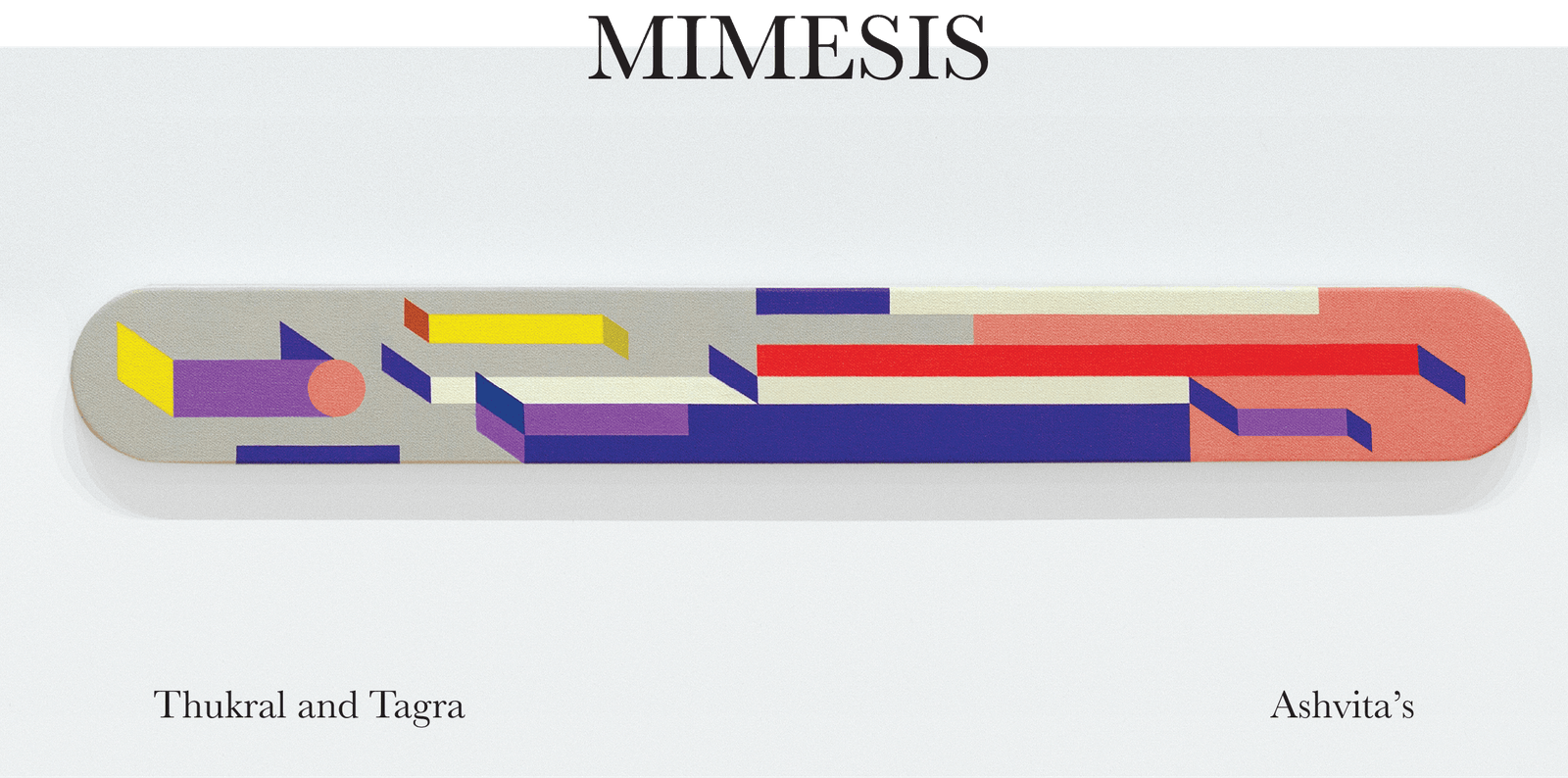
Audio Guide _Walkthrough
Prologue
Welcome to mimesis by Thukral and Tagra
This show is an amalgamation of new beginnings: of the new flagship gallery for Ashvita’s, of an evolving series for our studio’s practice, and of relationships emerging through experiencing our work here in Chennai, for the first time.
Stretched across online and offline realms, our experience today is being archived, measured and reshaped in algorithmic rituals. In this evolving digital condition, this exhibition asks what it means to inhabit worlds built through data and mediated images.
Mimesis emerges from a residue and extension of our ongoing series, Arboretum. It evolves and multiplicates from a unit of unintentional origin, of conscious remnant canvases, to take a new life and form today. In its evolution lies its power to offer a space to reflect, to slow and to pause from the flashes of new-age development. Mimesis itself, mimics and imitates what can be seen as a digital version of our own selves, of what we cannot see or perceive, but exists in its own right.
As you enter, the body moves through these four walls, each with concurrent parallels of thought, and glides on the spectrum of self, reality, politics and technology, enmeshed together and illuminated, through the glow of light and screen.
The works mutate within the same units. The different arrangements of similar canvases repeat across each surface, enveloping the viewer through patterns and scale. The familiarity of the curved canvas evokes digital design vocabularies, of the forms we constantly engage with while switching, settling and answering calls.
The pieces speak of a world that is becoming increasingly mechanical and automated, but within it lies the patience and presence of a hand. In each stroke of the brush carefully made in sharp boundaries, you feel the deeply embedded humanness in what feels so calculated and concise.
The works arrive and are a set, a family of shared colours and forms, of rhythms and repetition, of careful whispers and concerning data. They begin to suggest systems held together through measured distances and subtle relationships, some of upright human figures, of incomprehensible silhouettes emerging simply through the placements of painted units across a plane. But what you think it is, is entirely up to you.
The exhibition also provides a series of evolving documents that inform the daily practice within the Thukral & Tagra Studio. Categorised as Recent Memory, these works mark immediacy while bringing criticality to conversations around subjects that demand attention, and continued engagement. These documents contain numbers, graphs, pie charts, and statistics that inform the exhibition.
This series centers a sentient unit, accumulating, fragmenting, indexing and reflecting on our relationship to the world, to technology and to one within us. What emerges from the choices we make traversing the DIKW pyramid: Data- Information- Knowledge- Wisdom pyramid, shows what we gain or lose, or be learned or lost. Today, artificial intelligence thrives precisely at this foundational layer, continuously collecting and processing raw data, pixels, clicks, gestures, images, language, and behaviour. Yet the question remains: does the endless accumulation of data naturally lead to wisdom, or are we trapped within infinite loops of information without deeper understanding?
Feral Shadows:
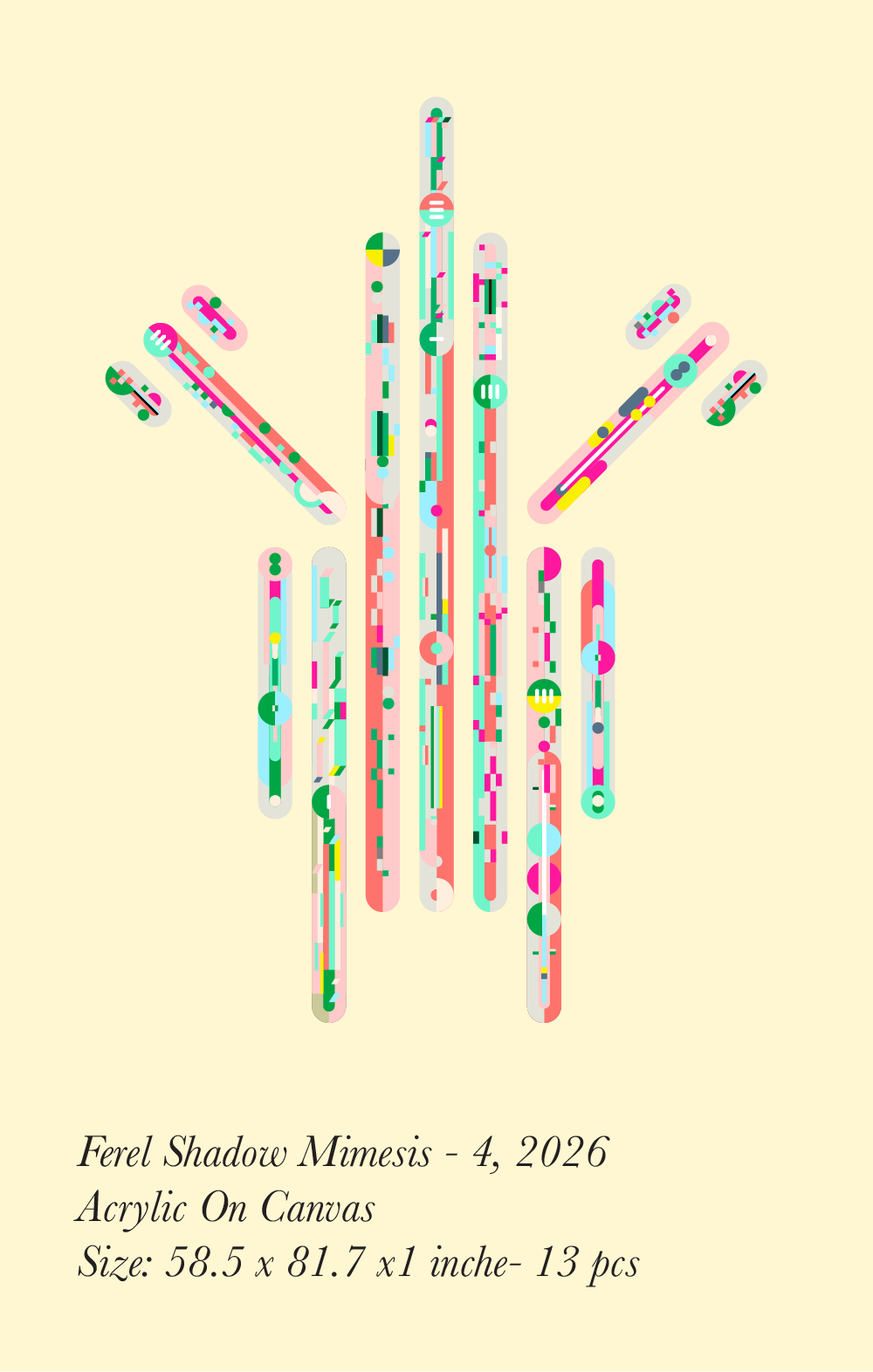
How do we trust the data we generate? We leave digital footprints constantly, yet how often do we stop to visualise our own searches, preferences, and compulsions? What did you look up last year, last week, or perhaps yesterday? We rarely remember. Yet somewhere, a precise log of our digital doings persists.
Our digital shadows can be wild and untamed, capable, in equal measure, of harming or comforting us.
Mutation 2:
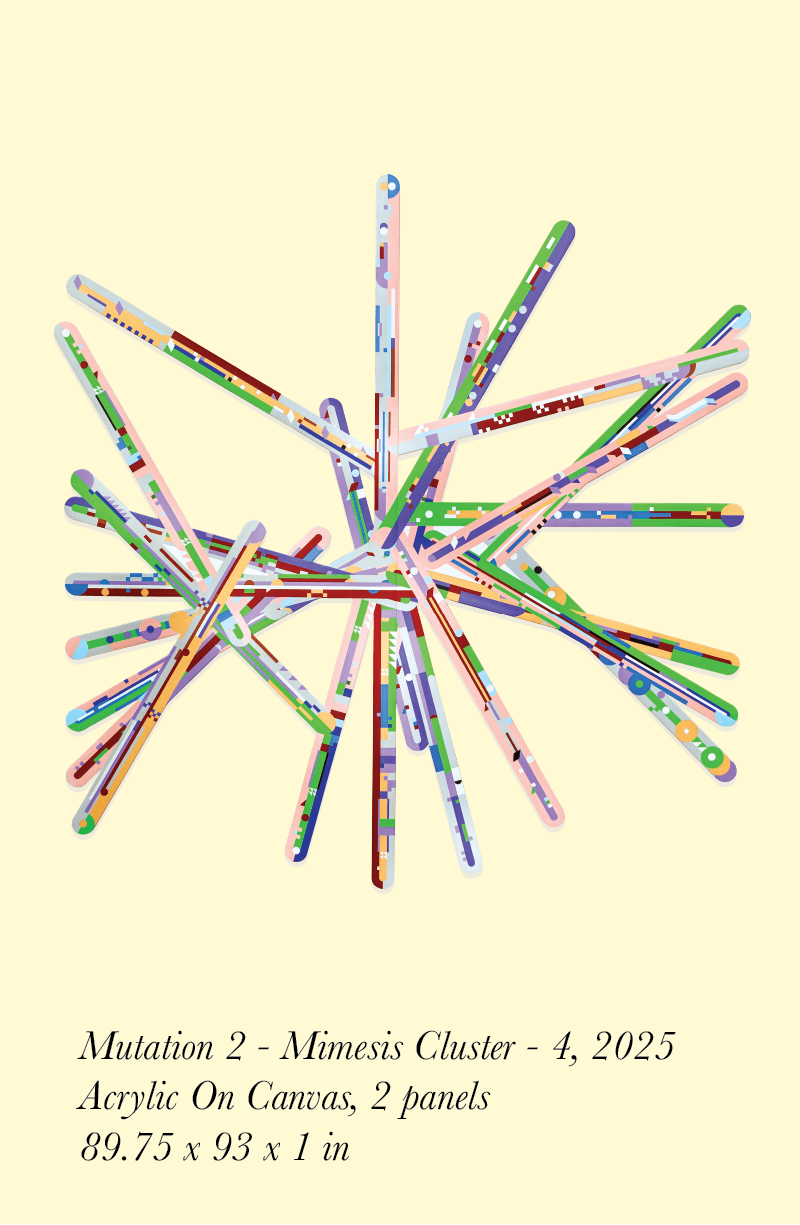
Data harvesting is perhaps the defining story of our present. Millions of data-driven projects access our private lives, and we have practically no control over what is collected, retained, or shared. These datasets can be biased, misused, and fed into systems designed to surveil and control.
The mutation of such databases carries consequences
beyond the individual, capable of eroding moral
frameworks and destabilising the social orders
We have long taken for granted.
Echo – Dataset – 1:
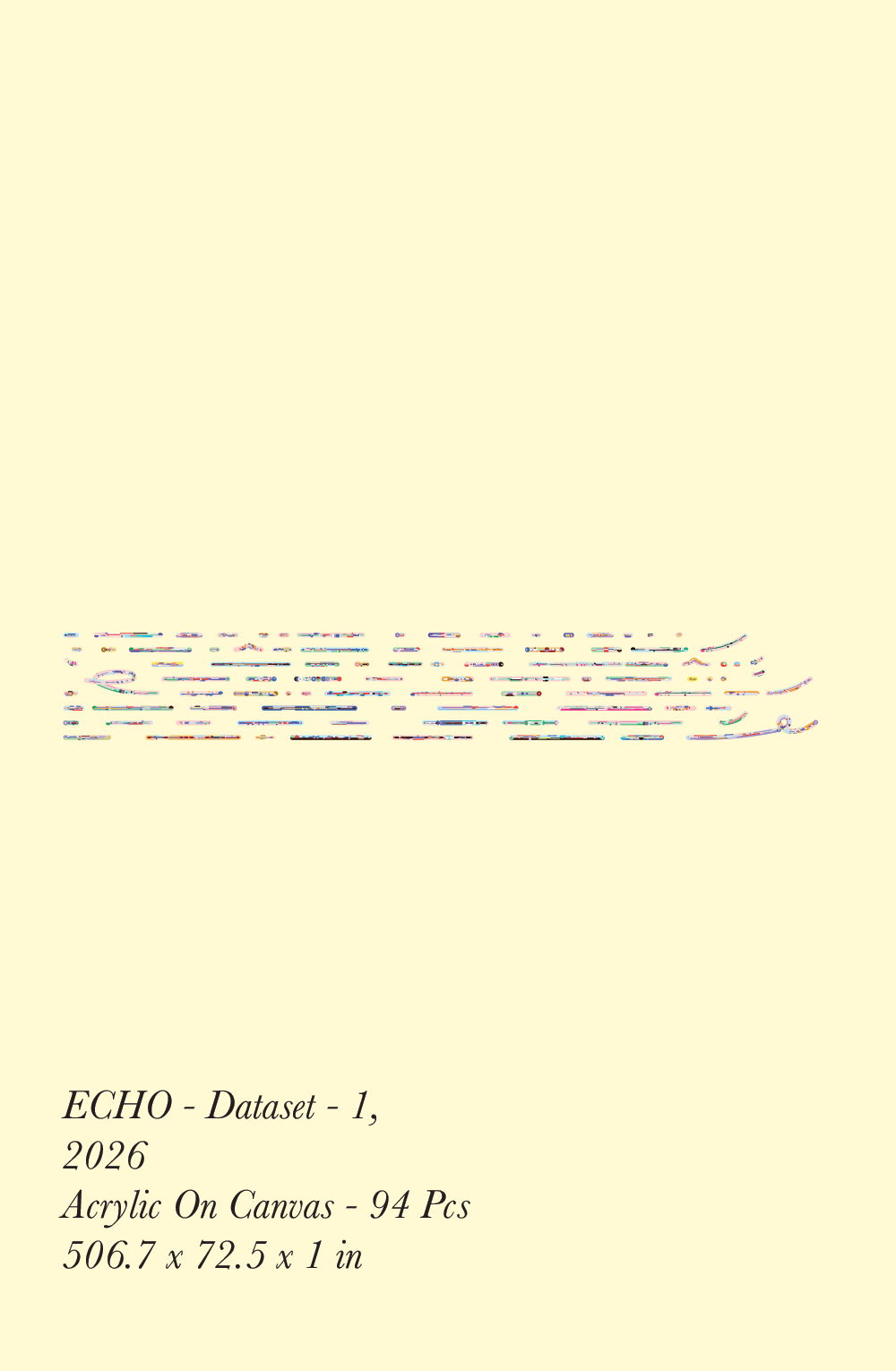
In moments of absence, we return to pictures, old messages, voice notes, and forgotten clips, small digital remnants that allow us to briefly relive what has already passed. It is deeply human to mourn, to hold on, and to resist letting go of those we love. It’s human nature to mourn and hold on to the person they love.
Even when we know someone will never return, a part of us continues searching for traces of their presence. When nothing else works, we want to use tech to secretly build a version that only simulates our loved one. A version that comforts, haunts, and briefly fills the silence.
Parse
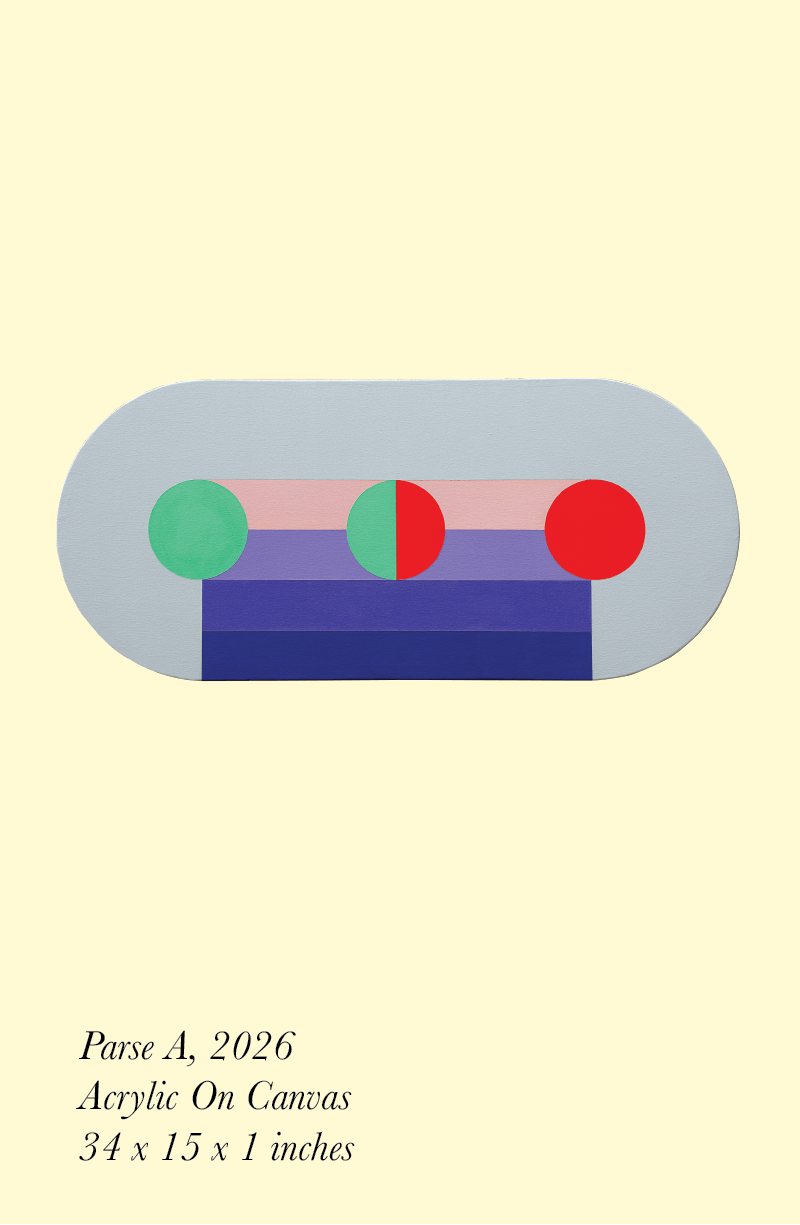
Parse marks a new body of work — one that zooms into the act of breaking down complex data structures into smaller, more manageable components; fragments that can be individually examined, understood, and reassembled.
Parallel selves
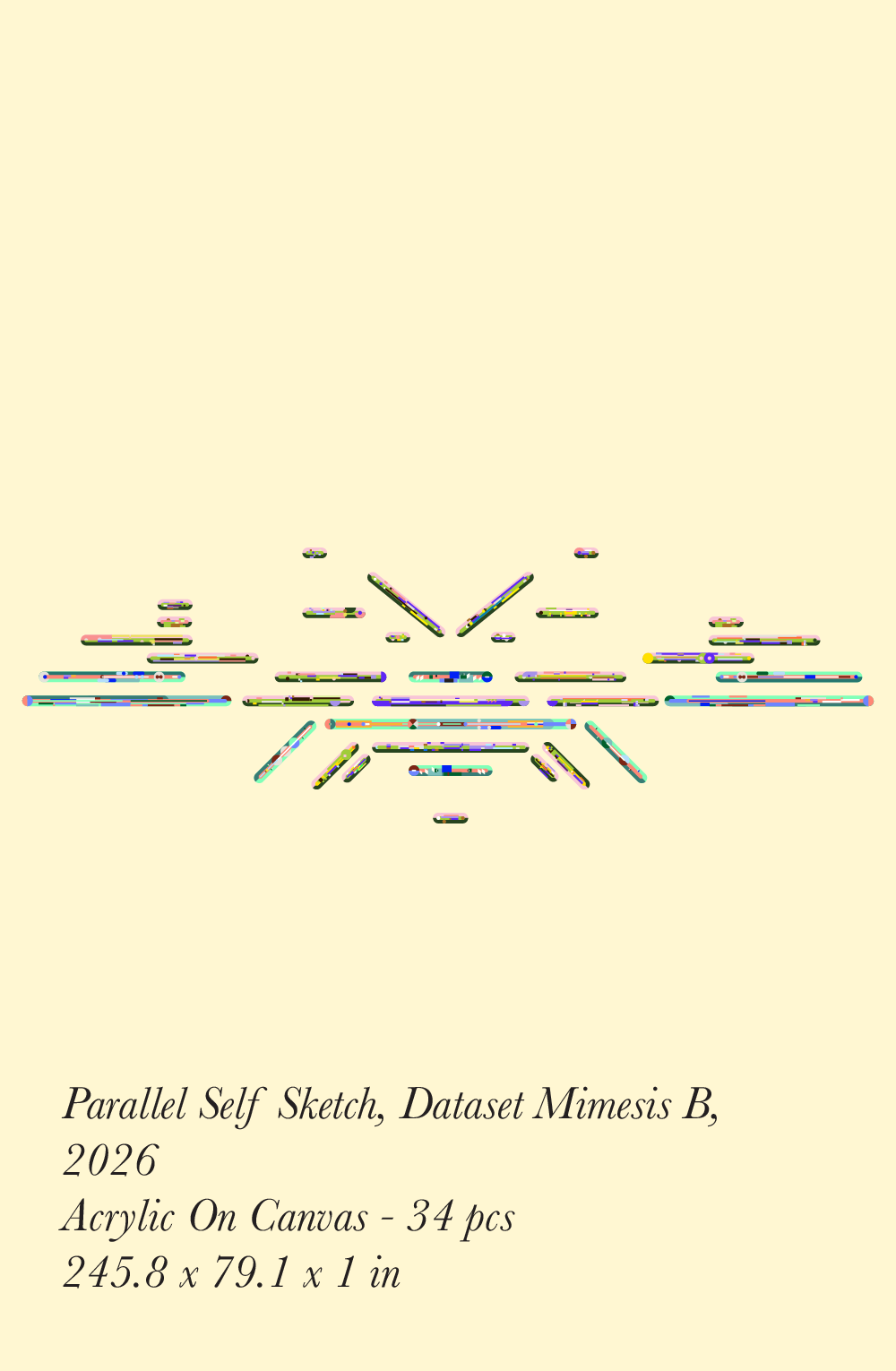
We are never fixed. Over the course of a lifetime, we continuously evolve, shedding old desires, fears, beliefs, and habits while stepping into new versions of ourselves. In many ways, a single human life already contains many selves. The person we were five years ago, or even last week, can begin to feel distant and unfamiliar. Human memory allows for forgetting. It blurs, edits, and releases fragments of the past so we can continue becoming.
But digital systems remember differently. What we searched for years ago, what we paused on yesterday, what we desired in passing, what we feared in the middle of the night, all of it can remain archived within invisible histories and datasets. The human mind cannot possibly recollect every version of itself, yet data logs attempt to preserve them all. They feed on our traces, slowly constructing parallel portraits of who we are, or who we once were, deep within our internal worlds
Copyright 2026